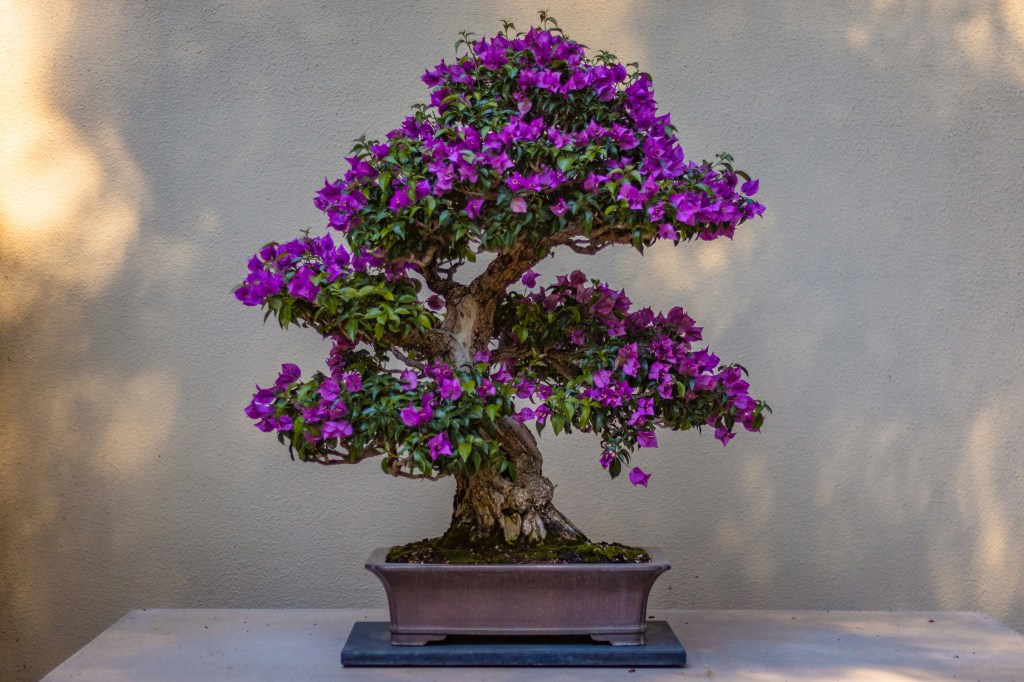
Origins in China
Bonsai, meaning “planted in a container,” has its roots in the ancient Chinese art of penjing, which dates back over 2,000 years. Penjing involved creating miniature landscapes with trees and rocks, often symbolizing harmony between nature and humans.
By the Tang Dynasty (618–907 AD), penjing was a full-blown operation; however, miniature trees were cultivated for wealth or status.
Entry into Japan
During the Kamakura period (1185–1333), this valuable art of penjing was brought back to Japan by the monks and diplomats visiting China.
The Japanese perfected this technique by choosing individual trees rather than entire landscapes. This led to the creation of the identity we now know as bonsai.
Because of Zen Buddhism, bonsai became a meditative exercise that focused on simplicity, balance, and the beauty of imperfection or wabi-sabi.
Evolving in Japan
By the Edo period (1603-1868), bonsaI had become a popular art form exercised by elite Japanese people. Innovations in tree shaping and styling were given higher dimensions with specific styles, for example, formal upright and cascade.
The institutionalization of bonsai into the culture was seen with the inception of its exhibitions and competitions.
Going Global
Around the late end of the nineteenth century and early twentieth century, bonsai was introduced to the West, especially after international exhibits in which Japan participated.
At this time, bonsai exists globally – combining modern innovations with traditional techniques.
Bonsai Philosophy
Bonsai is more than just miniature trees, it is art, nature, and philosophy coming together. Originating from ancient China and later defined in Japan, bonsai principles encompass:
A Connection with Nature: Recognizes the beauty and imperfection of nature, encouraging the observer to view and respect the natural growth patterns.
Patience, Tenacity, and Endurance: Shaping and nurturing a bonsai will take years, and so does learning to teach patience and adherence.
Aesthetically Balanced: Bonsai finds balance and harmony within itself, inspired often by the Japanese wabi-sabi, which values simplicity and imperfection.
Reflect their spirit: Tending their bonsai may serve as a meditative practice, promoting mindfulness and internal peace.
Bonsai Techniques
Pruning:
Regular trimming of branches and roots maintains the miniature size of the tree and its shape.
Wiring:
Thin wires are used for guiding the growth of branches and trunks to create artistic forms.
Repotting:
Every few years, bonsai trees are normally repotted for soil rejuvenation and avoidance of root-bound conditions.
Watering and Fertilizing:
Proper hydration and nutrients are the requisites for tree health and longevity.
Shaping Styles:
Common styles include:
Chokkan (Formal Upright): A straight trunk symbolizing strength.
Kengai (Cascade): Branches cascade downward, mimicking trees on cliffs.
Fukinagashi (Windswept): A tree shaped as if blown by strong winds.
Critch & TC
Sources:
The Art of Bonsai – Cultivation and Care | Garden Insider
Understanding the History and Philosophy of Bonsai Cultivation | Cultivating Flora
The History and Philosophy of Bonsai Gardening | Live to Plant

 Universal Chronicle
Leave a comment