The secrets behind the durability and longevity of Roman concrete structures.
What is Roman Concrete?
Their opus caementicium is the Roman concrete-an old building material formulated by the Romans. It was used in many of their famous structures, such as the Pantheon, aqueducts, and amphitheaters, a great number of which have survived the decades for over 2,000 years. Unlike today’s concrete, Roman concrete was made up of different types of materials that exerted their unique modes of contribution to that uncommon durability.
What’s Behind Its Durability?
Volcanic Ash (Pozzolana):
One of the most important ingredients of Roman concrete is volcanic ash called pozzolana, a kind of ash procured from places like Pozzuoli near Naples. Together with lime and water, pozzolana produces a chemical reaction during which a so-called pozzolanic reaction takes place and results in producing a well-dense, very resistant, and non-cracking, non-eroding material2 when mixed with lime and water.
Self-healing Properties:
Recent investigations have revealed that Roman concrete has lime clasts (calcium-rich inclusions). When cracks are formed, these lime clasts react with water to fill the voids, restoring the material’s integrity.
Outstanding Durability Against Hostile Environments:
Roman concrete, for example, was specially resistant to seawater; hence, it became very suitable for a construction that was located right on or underneath water. The strength of the material continues to develop with time from the rather degrading effects that came when seawater intermixed with volcanic ash.
Construction Methods:
These advanced design techniques that Romans drew on included layering and formworks and above it all enhanced and provided strength and stability to structures.
Roman concrete is opus caementicium. you find it everywhere across the former physical boundaries of the Roman Empire, which stretched from Europe all the way down to North Africa and even into parts of the Middle East. The vast majority of these constructions are still incredibly intact, bearing witness to the ancient material’s durability.
Examples of Intact Ancient Roman Concrete Structures
The Pantheon (Rome, Italy):
It is perhaps the most renowned for its enormous domed ceiling-that’s all unreinforced concrete. The Pantheon speaks to the solidity of Roman concrete. Built around 126 CE, it remains one of the best-preserved monuments of ancient Rome.
Roman Aqueducts:
Pont du Gard in France and Aqua Claudia in Italy define Roman water transportation. Some aqueducts today are still used.
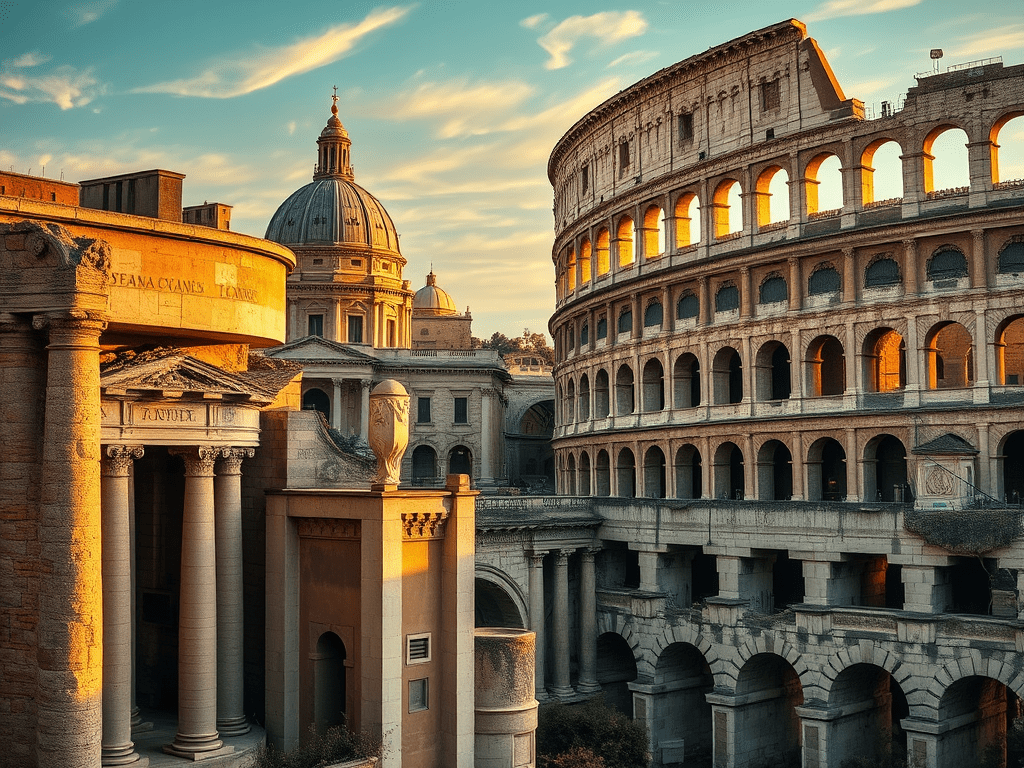
The Colosseum (Rome, Italy): Constructed in 70-80 CE, the Colosseum utilized Roman concrete again. It stands today as a classic icon of Roman engineering, even after millennia of wear and nature’s disasters.
The Baths of Caracalla:
These were ancient public baths built in Rome in the early years of the 3rd century CE. These, too, stand as evidence for the extensive uses of Roman concrete in large architectural enterprises.
Harbor Structures:
Maritime constructions made of Roman concrete include the harbor at Caesarea Maritima (present-day Israel) and the Portus harbor near Rome. These submerged dates prove the seawater-resistance property of the material.
Critch & TC
Sources:
The Secrets of Roman Concrete: Unraveling Its Incredible Durability
How Did The Romans Make Concrete? The Secrets Behind Its Incredible Durability – ConcreteCaptain.com
Riddle solved: Why was Roman concrete so durable? | MIT News | Massachusetts Institute of Technology
Roman Concrete: Stronger, Self-healing, and Built to Last Forever
The 30 Most Important Roman Structures That You Can Visit Today –

 Universal Chronicle
Leave a comment