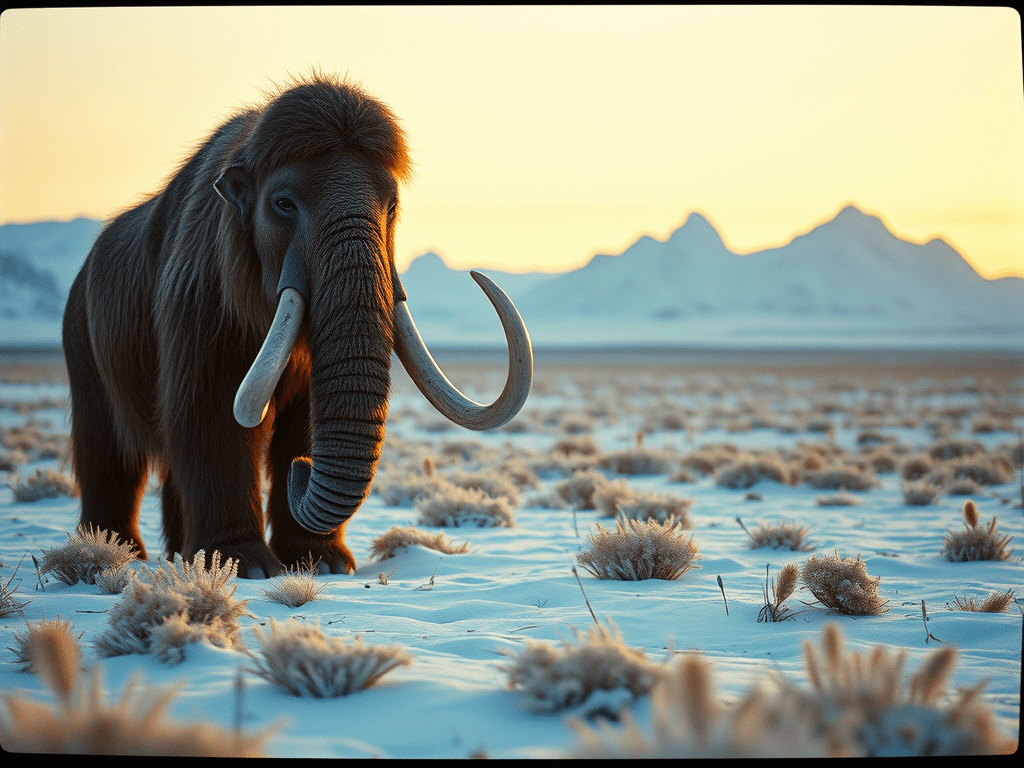
The possibilities of de-extinction and bringing back animals like the woolly mammoth.
De-extinction refers to the resurrection of extinct species through highly advanced scientific techniques; this has become a more relevant topic following continued developments in genetic engineering, cloning, and genome editing technologies such as CRISPR. The woolly mammoth (Mammuthus primigenius) is perhaps one of the most prominent candidates for de-extinction due to the preservation of DNA and possible positive ecological impact.
Woolly Mammoths and De-Extinction
The Scientific Process:
Scientists aim to recreate a cold-resistant elephant with traits resembling the woolly mammoth by inserting mammoth DNA into the genome of its closest living relative,
the Asian elephant. This process involves genome editing and surrogate pregnancies in female elephants that will give birth to the embryos.
Ecological Goals:
Reintroduction of the woolly mammoth to the Arctic tundra will assist in the regeneration of grassland ecosystems, curb climate change by reversing the thawing of permafrost, and enhance biodiversity.
Challenges:
Ethics associated with animal welfare and reintroducing extinct species for ecological considerations. Technical obstacles include ensuring that the species’ genetic recreations are viable and healthy.
Ethical and Philosophical Considerations:
De-extinction raises important ethical questions: To what extent should resources be devoted to the resurrection of extinct species at the expenditure of conservation policies for endangereds? What could be some of the risks posed by such reintroductions into modern ecosystems?
Thanks to new advances in genetic engineering and biotechnology, de-extinction is no longer mere conjecture. Although an enormously complicated and daunting process, scientists are gradually undertaking projects in resurrecting extinct species or creating genetically similar versions.
Critch & TC
Sources:
De-extinction | Definition, History, Ethics, & Facts | Britannica
Woolly Mammoth De-extinction Project & Process | Colossal

 Universal Chronicle
Leave a comment