Origin
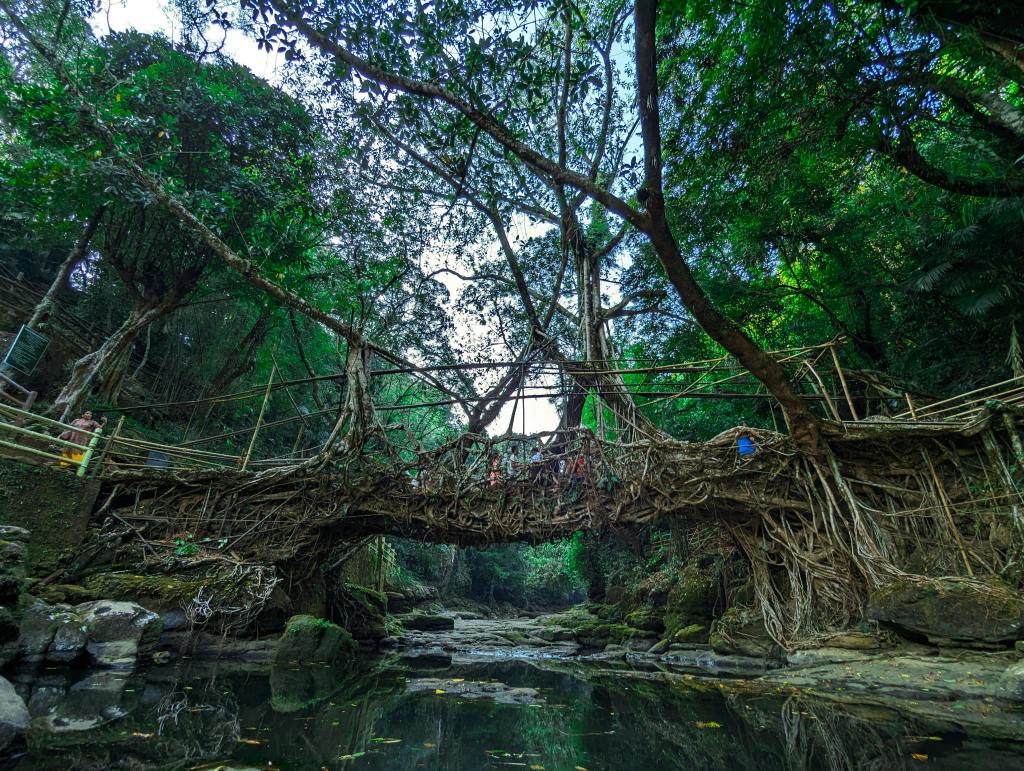
The living root bridges of Meghalaya, India, are an extraordinary example of bioengineering and sustainable design.
These bridges are constructed by the Khasi and Jaintia tribes using the aerial roots of the Ficus elastica tree, commonly called the Indian rubber tree.
The very act of growing these bridges has existed for centuries and is a deep-rooted practice in the cultural heritage of the region.
Construction Technique
Living root bridges are made from the Ficus elastica tree roots directed across rivers and streams over bamboo scaffolding. The roots grow and intertwine into a solid, resilient bridge over time.
It sometimes takes 15-20 years for the bridge to fully mature, but once that is done, these bridges survive for centuries with the least maintenance.
Not only do these existing root bridges work, but they are vital for the ecosystem, for preventing soil erosion and withstanding heavy monsoon rains.
Significance and Impact
These living root bridges represent the harmonious relationship between man and nature. They are a living example of sustainable infrastructure since they are grown, not built: no trees are cut down nor any resources extensively used in the process.
These bridges sustain the anthropic environment, allowing communities to cross rivers and streams safely and maintaining this capability even during the grueling monsoon season.
The Umshiang Double Decker Root Bridge at Nongriat village is famous for attracting tourists in their thousands and nature lovers every year.
Critch & TC
Photo by Pushkar Sarkar : https://www.pexels.com/photo/the-beauty-of-meghalaya-27820314/
Sources:
Exploring Meghalaya’s Living Root Bridges: A must-visit natural wonder
Search Results: Living root bridges – World History Encyclopedia
Living root bridge – Wikipedia

 Universal Chronicle
Leave a comment